A Patient’s Guide to the Mitochondrial Peptide Redefining Metabolic Wellness
If you’ve been paying attention to the frontier of longevity medicine, you’ve likely started hearing about peptide therapy — and one name keeps surfacing in the research: MOTS-c. It’s a molecule your own body produces, encoded not in your nuclear DNA but in the ancient genetic code of your mitochondria — the energy factories inside every cell. Scientists are calling it one of the most promising discoveries in metabolic medicine in years, and for good reason.
At Millenia Medical Center in Tacoma, WA, we are committed to offering science-backed wellness therapies that go beyond symptom management and address the underlying biology of how you age, perform, and feel. This guide is designed to give you a thorough, honest, and clinically grounded introduction to MOTS-c — what it is, what the research suggests it can do, and what responsible medical supervision looks like before you consider it.
What Is MOTS-c? Understanding the Mitochondrial Peptide
A Peptide Born Inside Your Cells’ Power Plants
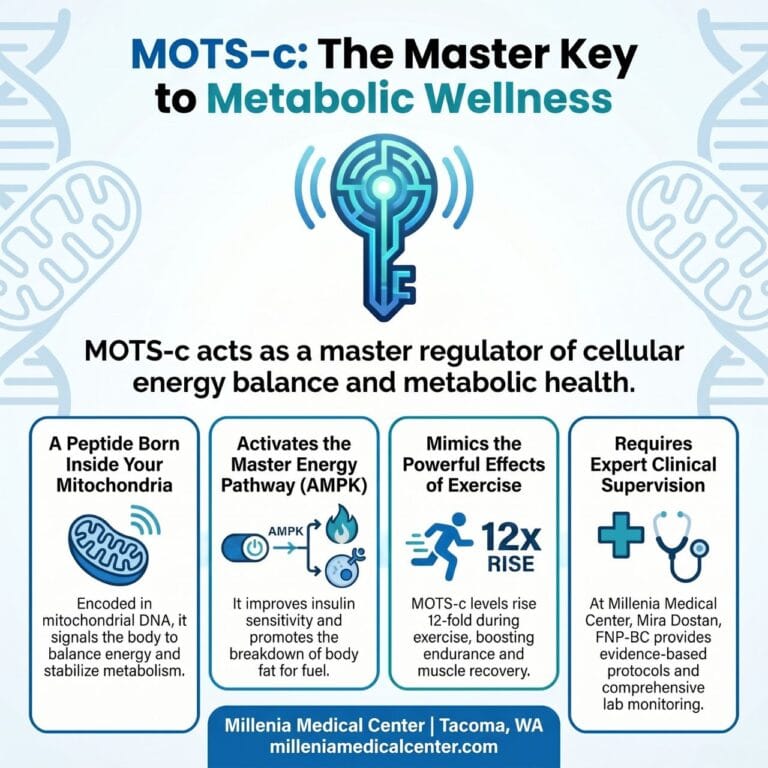
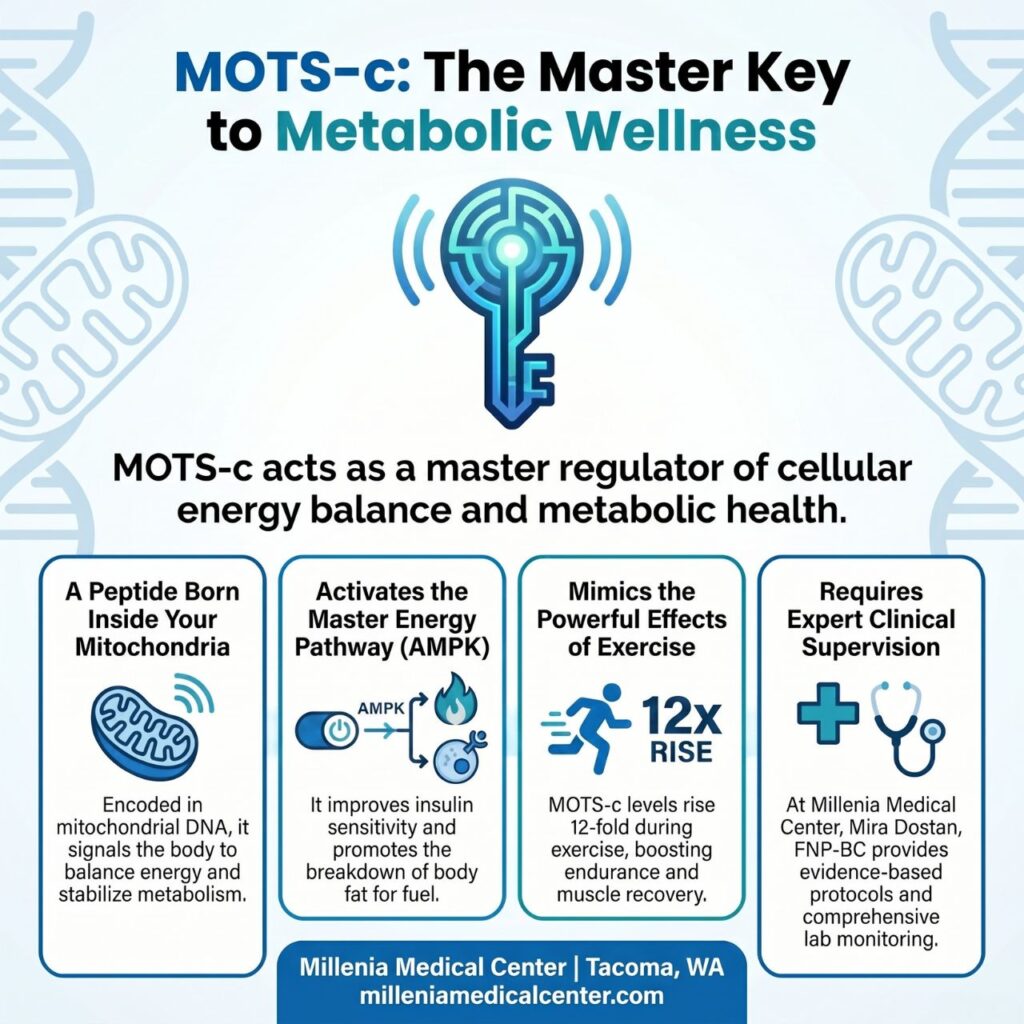
MOTS-c stands for Mitochondrial Open Reading Frame of the 12S rRNA Type-C — a 16-amino-acid peptide that is encoded within the mitochondrial genome, rather than the nuclear DNA where most proteins in the body originate. This distinction is not merely academic. It means MOTS-c is one of a rare class of mitochondrial-derived peptides (MDPs) that functions as a direct communication signal between your cells’ energy centers and the rest of your body.
The peptide was first identified in 2015 by a research team at the University of Southern California, led by Dr. Changhan David Lee. Their work revealed that MOTS-c acts as a powerful regulator of metabolic homeostasis — the body’s ability to maintain balanced energy production, stable blood sugar, healthy fat metabolism, and cellular resilience under stress.
How MOTS-c Works at the Cellular Level
At its core, MOTS-c functions by activating the AMPK pathway (adenosine monophosphate-activated protein kinase) — widely considered the master regulator of cellular energy balance. When AMPK is activated, it initiates processes that generate energy, including glucose uptake and fatty acid oxidation, while suppressing energy-wasting activities that aren’t immediately necessary.
What makes MOTS-c especially remarkable is its ability to move — literally. Under conditions of metabolic stress, oxidative damage, or age-related cellular decline, MOTS-c translocates from the mitochondria into the cell nucleus, where it directly influences gene expression. Once there, it activates genes related to antioxidant defense, helping cells protect themselves from the kind of oxidative damage that drives chronic disease and accelerates aging.
MOTS-c and Metabolic Regulation
Insulin Sensitivity and Blood Sugar Balance
One of the most studied and clinically significant areas of MOTS-c research is its impact on glucose metabolism. Preclinical studies have shown that MOTS-c administration markedly improves insulin sensitivity and reduces insulin resistance — a finding that has drawn significant attention from researchers studying type 2 diabetes and metabolic syndrome.
In one landmark animal model study, subjects treated with MOTS-c demonstrated substantially improved glucose metabolism and resistance to diet-induced obesity — even when consuming a high-fat diet. A 2025 study published in Frontiers in Physiology examined MOTS-c’s effects on cardiac mitochondrial function in a type 2 diabetes model, finding that the peptide restored mitochondrial function in a way that conventional diabetes management does not directly address.
Fat Metabolism and Body Composition
Beyond blood sugar regulation, MOTS-c promotes fatty acid oxidation — the biochemical process through which stored body fat is broken down for cellular energy. By enhancing this process, MOTS-c may help prevent the accumulation of dysfunctional metabolic byproducts that contribute to chronic inflammation and cellular deterioration over time.
For patients dealing with metabolic sluggishness, persistent fatigue despite adequate sleep, difficulty losing weight despite lifestyle changes, or early markers of metabolic syndrome, the MOTS-c pathway represents a biologically meaningful target for investigation — under proper medical supervision.
MOTS-c and Mitochondrial Dysfunction
MOTS-c levels in the body are not static — they respond to stress, exercise, and aging. Research indicates that circulating MOTS-c levels naturally decline with age, a decline that correlates with the onset of insulin resistance, declining energy production, and increased metabolic disease risk. This pattern has led researchers to describe MOTS-c as a potential biomarker of metabolic aging — and a therapeutic target for slowing it.
MOTS-c and Physical Performance
The Exercise-Mimicking Effect
One of the most intriguing discoveries in MOTS-c research is what scientists have called its exercise-mimicking properties. Studies in humans show that MOTS-c levels rise approximately 12-fold during exercise, remaining elevated for at least four hours post-workout. This response is the body’s natural attempt to protect muscle cells from metabolic stress and optimize their efficiency during and after physical activity.
Research in animal models — including a notable study from the University of Southern California — demonstrated that MOTS-c injections doubled running capacity in mice of varying ages, including older mice that would be expected to show significant age-related performance decline. The peptide appears to work by encouraging mitochondrial biogenesis (the creation of new mitochondria), enhancing glucose utilization in muscle tissue, and promoting gene expression related to endurance and strength adaptation.
Implications for Patients Pursuing Active Aging
For Tacoma-area adults focused on maintaining physical vitality, athletic performance, or recovering from the metabolic slowdown that often accompanies aging, these findings are scientifically meaningful. MOTS-c research suggests potential benefits including:
- Improved endurance and exercise tolerance through optimized muscle cell energy use
- Faster metabolic recovery following physical exertion
- Resistance to age-related sarcopenia (muscle mass decline), a major driver of frailty
- Enhanced mitochondrial biogenesis — more efficient, more numerous cellular energy factories
It is essential to note that while animal model data is compelling, human clinical trials on MOTS-c are still in early stages. These findings represent promising preclinical evidence, not established clinical protocols. Your provider will discuss what the current state of evidence means for your individual situation.
MOTS-c and Healthy Aging
Reducing Systemic Inflammation and Oxidative Stress
Two of the most well-established drivers of accelerated biological aging are chronic low-grade inflammation and oxidative stress — the accumulation of cellular damage from unstable oxygen molecules (free radicals). MOTS-c has demonstrated, in research settings, a capacity to reduce markers of both.
By activating antioxidant response genes when it translocates to the cell nucleus, MOTS-c may help maintain cellular integrity over time — defending mitochondria from the wear that compounds into the conditions we associate with aging: declining energy, cognitive fog, metabolic disease, and cardiovascular vulnerability.
Emerging Research: Pancreatic Health and Cellular Senescence
A 2025 study published in Experimental & Molecular Medicine found that MOTS-c treatment reduced senescence in pancreatic islet cells and beta cells — the insulin-producing cells of the pancreas. Cellular senescence, sometimes called “zombie cells,” is a state where damaged cells stop dividing but refuse to die, releasing inflammatory signals that damage surrounding tissue. MOTS-c’s apparent ability to reduce this process has significant implications for both metabolic health and longevity research.
Neuroprotection and Cognitive Vitality
The Alzheimer’s Drug Discovery Foundation’s cognitive vitality review of MOTS-c notes that the peptide enhances metabolic flexibility, improves insulin sensitivity, and may act as an exercise mimetic — all properties relevant to brain health, given the brain’s extraordinary demand for stable glucose metabolism and its vulnerability to oxidative damage. While MOTS-c is not approved or clinically established for cognitive applications, this area of research is actively developing.
Safety Considerations and the Critical Role of Physician Supervision
What Patients Need to Know About MOTS-c’s Regulatory Status
Transparency is a core value at Millenia Medical Center, and on the topic of safety, we will be direct:
MOTS-c is not currently FDA-approved for human use. The U.S. Anti-Doping Agency (USADA) classifies it as an experimental peptide still under investigation, and the FDA has indicated that MOTS-c is among the peptides that compounding pharmacies are not permitted to include in compounded medications under standard regulatory frameworks.
This does not mean research has shown MOTS-c to be harmful — available preclinical data suggests it is generally well-tolerated. It does mean that human clinical trials are limited, long-term safety data in humans does not yet exist, and self-administration without medical oversight carries meaningful unknown risks.
Reported side effects in individuals who have self-administered MOTS-c (typically obtained outside regulated medical channels) have included:
- Injection site irritation
- Increased heart rate or palpitations
- Insomnia
- Mild fever
- Nausea or gastrointestinal discomfort at higher doses
- Potential hypoglycemia in patients with already-low baseline glucose
Why Medical Supervision Is Non-Negotiable
At Millenia Medical Center, our approach to any emerging therapy — including peptides — begins with a thorough clinical evaluation. Before any wellness therapy is recommended, our provider, Mira Dostan, FNP-BC, conducts:
- Comprehensive baseline labs — fasting glucose, HbA1c, lipid panel, comprehensive metabolic panel, and relevant biomarkers
- Full health history review — including medications, cardiovascular risk factors, metabolic conditions, and personal goals
- Honest candidacy assessment — discussing what the current evidence supports, what it does not yet confirm, and whether the therapy is appropriate for your specific clinical picture
- Ongoing monitoring — any therapeutic protocol is paired with regular follow-up labs and clinical check-ins
We will never recommend a therapy that exceeds what the evidence responsibly supports for your situation. That is our standard, and it is non-negotiable.
Who May Be a Candidate for Peptide Therapy Consultation?
A conversation about MOTS-c or other peptide therapies may be worth having at Millenia if you are experiencing:
- Persistent metabolic challenges — difficulty managing blood sugar, weight, or energy despite lifestyle changes
- Markers of metabolic syndrome — elevated triglycerides, insulin resistance, abdominal adiposity, or pre-diabetes
- Age-related performance decline — fatigue, reduced exercise capacity, or loss of muscle mass in an otherwise active lifestyle
- Interest in proactive longevity medicine — you are healthy and want to understand your biological aging markers and options
- Mitochondrial concerns — chronic fatigue, brain fog, or conditions associated with cellular energy dysfunction
A consultation is an information-gathering conversation — not a commitment to treatment. Our role is to give you the most current, evidence-based perspective available, and to help you make an informed decision.
Peptide Therapy as Part of a Comprehensive Wellness Plan in Tacoma
MOTS-c research exists within a broader landscape of longevity and metabolic wellness medicine that Millenia Medical Center is uniquely positioned to offer in the Tacoma area. Peptide therapy, when it is appropriate, is most effective as part of a comprehensive wellness plan that may also include:
- Medical weight loss / GLP-1 therapy for patients managing obesity and metabolic disease
- Hormone replacement therapy (HRT) to address age-related hormonal decline that compounds metabolic dysfunction
- IV therapy and micronutrient optimization to support cellular energy pathways
- Morpheus8 RF microneedling and skin rejuvenation for patients also focused on the aesthetic dimensions of healthy aging
At Millenia, we see wellness as a system — and we build plans accordingly.
Consult With a Knowledgeable Provider in Tacoma
The science around MOTS-c is genuinely exciting. It is also still evolving. At Millenia Medical Center, we stay current with emerging research precisely so our patients can have informed, nuanced conversations about what is available, what is evidence-supported, and what is not yet ready for clinical application.
If you are curious about MOTS-c, peptide therapy, or a comprehensive metabolic wellness evaluation, we invite you to schedule a consultation. You will leave with clear answers — not sales pressure.
📍 Millenia Medical Center | Tacoma, WA
📞 253-267-5086
🌐 Book your consultation at milleniamedicalcenter.com
This content is for educational purposes only and does not constitute medical advice. MOTS-c is not FDA-approved for human therapeutic use. All wellness therapies at Millenia Medical Center are preceded by a comprehensive clinical evaluation and are provided under the supervision of a board-certified medical provider.
Frequently Asked Questions About MOTS-c Peptide Therapy
Q: What is MOTS-c and what does it do?
MOTS-c is a mitochondrial-derived peptide that regulates metabolic function by activating the AMPK energy-sensing pathway, improving insulin sensitivity, promoting fat oxidation, and protecting cells from oxidative stress. It is encoded in mitochondrial DNA and acts as a signaling molecule between mitochondria and the cell nucleus.
Q: Is MOTS-c FDA-approved?
No. MOTS-c is currently an experimental peptide with promising preclinical research but no completed human clinical trials and no FDA approval for therapeutic use. Any provider or compounding pharmacy offering MOTS-c should do so within a fully informed-consent, medically supervised framework.
Q: What conditions might MOTS-c help with based on current research?
Current preclinical research suggests potential applications in metabolic syndrome, insulin resistance, type 2 diabetes, age-related muscle loss, exercise performance decline, and cellular aging. Human data is limited, and no therapeutic claims can be confirmed without completed clinical trials.
Q: Is MOTS-c safe?
Animal studies and available observational data suggest MOTS-c is generally well-tolerated at physiologic doses under medical supervision. Self-administered MOTS-c without medical oversight carries unknown risks, and reported side effects have included palpitations, insomnia, injection site reactions, and hypoglycemia in susceptible individuals.
Q: Can I get a peptide therapy consultation at Millenia Medical Center in Tacoma?
Yes. Our provider, Mira Dostan, FNP-BC, conducts comprehensive wellness evaluations and can discuss peptide therapy in the context of your individual health history, labs, and goals. Book at milleniamedicalcenter.com or call 253-267-5086.