What Is Biote Hormone Pellet Therapy and Is It Available at a Medical Spa in Tacoma, WA?
You can’t quite name what’s wrong. You’re getting eight hours of sleep and still dragging by 2pm. Your patience feels shorter than it used to. The gym routine that worked for years suddenly isn’t moving the needle. Intimacy has quietly become something you think about less. And somewhere in the back of your mind, you’ve wondered: is this just aging, or is something actually off?
For men and women between the ages of 40 and 65, the answer is very often hormonal decline — and it is one of the most treatable, most overlooked drivers of feeling like a diminished version of yourself.
At Millenia Medical Center in Tacoma, WA, we are a Biote-certified provider, offering bioidentical hormone pellet therapy to help patients throughout Pierce County restore balance and reclaim the energy, mood, and vitality that hormonal decline quietly takes away. This guide explains exactly what Biote pellet therapy is, how it works, what the evidence shows, and what to expect from a consultation here in Tacoma.
What Is Biote Hormone Pellet Therapy?
Bioidentical Hormones, Delivered Consistently
Biote® is a leading provider of bioidentical hormone replacement therapy (BHRT) using subcutaneous pellets to help balance hormones in both women and men. “Bioidentical” means the hormones used are chemically identical to the hormones your body naturally produces — not synthetic analogs, but molecular matches derived from plant sources.
The pellets themselves are tiny — roughly the size of a grain of rice — and are inserted just beneath the skin, typically in the hip area, during a quick in-office procedure. Once in place, they dissolve gradually, releasing a steady, consistent dose of hormones directly into the bloodstream 24 hours a day for several months at a time.
Why Consistency Matters
This is the feature that distinguishes pellet therapy from other hormone delivery methods. Creams, pills, and injections all introduce hormones in peaks and valleys — a surge shortly after application or injection, followed by a decline until the next dose. Those fluctuations can themselves cause mood swings, energy crashes, and inconsistent symptom relief.
Pellets eliminate that rollercoaster. Because they release hormone gradually and continuously, patients experience stable, optimized hormone levels around the clock — without daily dosing, without patches to remember, and without the unpredictable ups and downs.
A 2025 clinical comparison published in the NAPGO journal found that women receiving BHRT via subcutaneous pellet showed greater improvement in menopausal symptoms compared to transdermal (patch) administration, without increased adverse events — reinforcing pellet therapy’s clinical standing as an effective delivery method.
The Hallmark Symptoms of Hormonal Decline
Why You Might Not Feel Like Yourself
Hormones — primarily estrogen, progesterone, and testosterone — regulate far more than reproduction. They influence brain chemistry, metabolism, sleep architecture, bone density, cardiovascular health, and mood regulation. As natural production declines with age — beginning as early as the mid-30s and accelerating through perimenopause, menopause, and andropause — the downstream effects touch nearly every system in the body.
In Women: Perimenopause and Menopause
Women in their 40s and 50s commonly experience:
- Hot flashes and night sweats that disrupt sleep and daily comfort
- Mood changes, irritability, or anxiety that feel disproportionate to circumstances
- Persistent fatigue despite adequate rest
- Brain fog and difficulty concentrating or recalling words
- Low libido and changes in sexual function
- Weight gain, particularly around the midsection, resistant to diet and exercise
- Sleep disturbances unrelated to stress or lifestyle factors
In Men: Andropause and Declining Testosterone
Men experience a more gradual hormonal decline, but the symptoms are equally disruptive:
- Low energy and reduced stamina
- Decreased muscle mass and increased difficulty building or maintaining strength
- Low libido and erectile changes
- Mood changes, including irritability or a flattened emotional baseline
- Brain fog and reduced mental sharpness
- Increased body fat, particularly visceral fat around the abdomen
- Sleep disruption
If several of these symptoms sound familiar, you are not alone — and you are not simply “getting older” in a way that has to be accepted without options.
What Are the Benefits of Biote Pellet Therapy?
What Patients Commonly Experience
According to Biote’s clinical research and reporting from certified providers, patients pursuing pellet therapy commonly experience improvement across the following areas:
- Increased energy and stamina — a return to feeling capable throughout the full day, not just the morning
- Improved mental clarity and mood — reduced brain fog, irritability, and anxiety
- Better sleep and reduced night sweats — more consistent, restorative rest
- Enhanced libido and sexual function — for both women and men
- Support for lean muscle mass and bone density — hormones play a direct role in maintaining both
- Reduced symptoms of menopause or andropause — including hot flashes and mood instability
How Quickly Do Results Appear?
According to Biote’s clinical guidance, most patients report some relief within four weeks of their first pellet insertion, though full optimization can take up to six months as hormone levels stabilize and the body adjusts. Many patients report their most significant improvement following their second insertion cycle, once their personalized dosing has been refined based on their response to the first round.
Is Biote Pellet Therapy Backed by Evidence?
An Honest Look at the Research
At Millenia, we believe informed patients make the best decisions — which means presenting the research accurately, including its nuances.
Subcutaneous hormone pellet therapy has a substantial clinical research base. Biote’s own comprehensive review of the scientific literature outlines efficacy and safety data supporting pellet delivery as a legitimate BHRT modality. Peer-reviewed research has also examined complication rates for hormone pellet implants, finding that when properly compounded and administered, testosterone and estradiol implants demonstrate low complication rates across patient populations.
Context matters. It’s worth noting that “bioidentical” hormone products, including compounded pellets, are compounded formulations rather than FDA-approved pharmaceutical products in the same regulatory category as manufactured hormone medications — a distinction some medical organizations highlight when discussing BHRT broadly. This doesn’t mean pellet therapy isn’t a valid, evidence-supported option — it means quality, dosing accuracy, and provider expertise are especially important considerations, which is precisely why working with a Biote-certified provider matters.pmc.ncbi.nlm.nih+2
At Millenia Medical Center, every pellet is custom-compounded based on your individual lab results, tested for potency and sterility, and administered under full clinical supervision — not a one-size-fits-all approach.
Who Is a Good Candidate for Biote Pellet Therapy?
Starting With Data, Not Guesswork
Candidacy for Biote pellet therapy is never determined by symptoms alone. At Millenia, the process always begins with comprehensive lab work to measure your current hormone levels — including estrogen, progesterone, testosterone, and relevant thyroid and metabolic markers.
You may be a strong candidate for a consultation if you are experiencing:
- Persistent fatigue that doesn’t improve with rest
- Mood swings, increased irritability, or new-onset anxiety
- Noticeable decline in libido or sexual function
- Brain fog or difficulty concentrating
- Hot flashes, night sweats, or sleep disruption (women)
- Unexplained loss of muscle mass or strength (men)
- Weight gain resistant to diet and exercise changes
- A general sense of “not feeling like yourself” despite no other clear medical explanation
A thorough consultation and lab review at Millenia will determine whether your symptoms align with a hormonal imbalance and whether Biote pellet therapy is the right path forward — or whether a different approach makes more clinical sense for you.
What to Expect at Your Biote Consultation at Millenia Medical Center
The Process, Step by Step
- Initial consultation — Mira Dostan, FNP-BC reviews your symptoms, health history, and goals in detail
- Comprehensive lab work — Bloodwork measures your current hormone levels and identifies any underlying imbalances or deficiencies
- Personalized treatment plan — Your pellet dosing is custom-compounded based on your specific lab results and symptom profile, not a standard dosebiote+1
- In-office pellet insertion — A quick, minimally invasive procedure performed under local anesthetic, typically taking just a few minutes
- Follow-up and monitoring — Ongoing lab work and check-ins ensure your dosing remains optimized as your body responds
- Repeat insertions — Most patients require pellet re-insertion every 3–5 months for women and 4–6 months for men, based on individual metabolism and hormone clearance rates
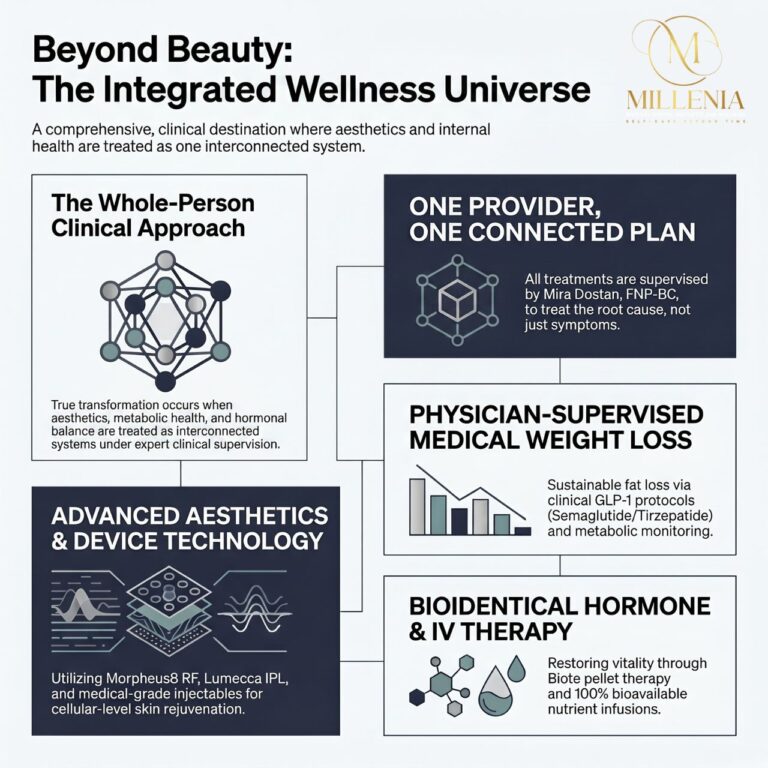
Millenia also offers complementary services — including IV infusion therapy, injectable vitamins, and peptide therapy — that many hormone optimization patients incorporate into a broader wellness plan for compounding benefits.
Why Choose a Biote-Certified Provider in Tacoma?
Not every provider offering “bioidentical hormones” has the training or certification to do so with precision and safety. Choosing a Biote-certified provider matters because it means:
- Your provider has completed Biote’s clinical training program specific to pellet dosing and insertion
- Your pellets are custom-compounded based on your individual lab work — not a generic protocol
- Every batch of hormones is tested for potency, sterility, and safety before use
- Your treatment plan includes structured follow-up and monitoring, not a one-time insertion with no oversight
At Millenia Medical Center, Mira Dostan, FNP-BC brings both Biote certification and broader clinical training in bioidentical hormone replacement therapy to every patient consultation — ensuring your care is grounded in both national protocol standards and individualized medical judgment.
Hormone Optimization as Part of a Complete Wellness Plan
Hormonal balance rarely exists in isolation from the rest of your health. Many patients pursuing Biote pellet therapy at Millenia also benefit from complementary services that address the full picture of metabolic and cellular wellness:
- Comprehensive blood work to identify nutrient deficiencies alongside hormonal imbalances
- IV infusion therapy to support energy, hydration, and cellular repair
- Medical weight loss programs for patients whose hormonal decline has contributed to weight gain
- Peptide therapy for patients interested in additional regenerative and metabolic support
- Skin rejuvenation treatments to address the aesthetic effects of hormonal aging on skin quality and collagen
At Millenia, we build integrated plans — because feeling like yourself again is rarely about just one thing.
Ready to Feel Like Yourself Again?
If you’ve been quietly wondering whether your fatigue, mood changes, or low libido are simply something to accept as part of getting older, we want you to know: they often aren’t. A comprehensive lab evaluation can tell you definitively whether hormonal decline is playing a role — and Biote pellet therapy offers a well-researched, individualized path back to feeling like yourself.
📍 Millenia Medical Center
4826 Tacoma Mall Blvd, Suite A | Tacoma, WA 98409
📞 253-267-5086
🌐 Book your hormone consultation at milleniamedicalcenter.com
Your first step is simply a conversation and lab work — no commitment required. Flexible financing available through Cherry.
Frequently Asked Questions: Biote Hormone Pellet Therapy in Tacoma
Q: What is Biote hormone pellet therapy?
Biote is a bioidentical hormone replacement therapy (BHRT) delivered via small, custom-compounded pellets inserted under the skin, releasing a steady dose of hormones over 3–6 months to help correct hormonal imbalances in men and women.
Q: What symptoms can Biote pellet therapy help with?
Common symptoms addressed include fatigue, mood swings, brain fog, low libido, hot flashes, night sweats, sleep disruption, and loss of muscle mass — all associated with declining estrogen, progesterone, or testosterone levels.
Q: How long does it take to see results from hormone pellet therapy?
Most patients report initial relief within about four weeks, with full optimization typically occurring over three to six months as hormone levels stabilize.
Q: How often do you need pellet insertions?
Most women require reinsertion every 3–5 months, and most men every 4–6 months, depending on individual hormone metabolism.
Q: Is Biote pellet therapy available at a medical spa in Tacoma, WA?
Yes. Millenia Medical Center is a Biote-certified provider offering hormone pellet therapy consultations, lab testing, and treatment for both men and women throughout Tacoma and Pierce County. Book at milleniamedicalcenter.com or call 253-267-5086.